
The 1967 Roosevelt dime represents an object of deep study resulting from historical operational features of the United States Mint in the mid-1960s.
This 1967 dime value is characterized by a temporary refusal to use mint marks on all denominations of American coins.
The decision, taken by the Mint administration, was aimed at reducing the activity of collectors accused of creating a shortage of circulating coinage in the country.

Despite the absence of letter designations, the coins were struck at three facilities: Philadelphia, Denver, and San Francisco.
The total mintage of the 1967 issue reached 2,244,007,320 specimens, making this coin one of the most mass-produced in the series' history.
1967 dimes were produced in a standard copper-nickel clad composition, having replaced the silver alloy in 1965.
The transition to a clad composition ensured the longevity of monetary units while maintaining weight standards.
Parameter | Value |
Outer Layer | 75% copper, 25% nickel |
Core | 100% copper |
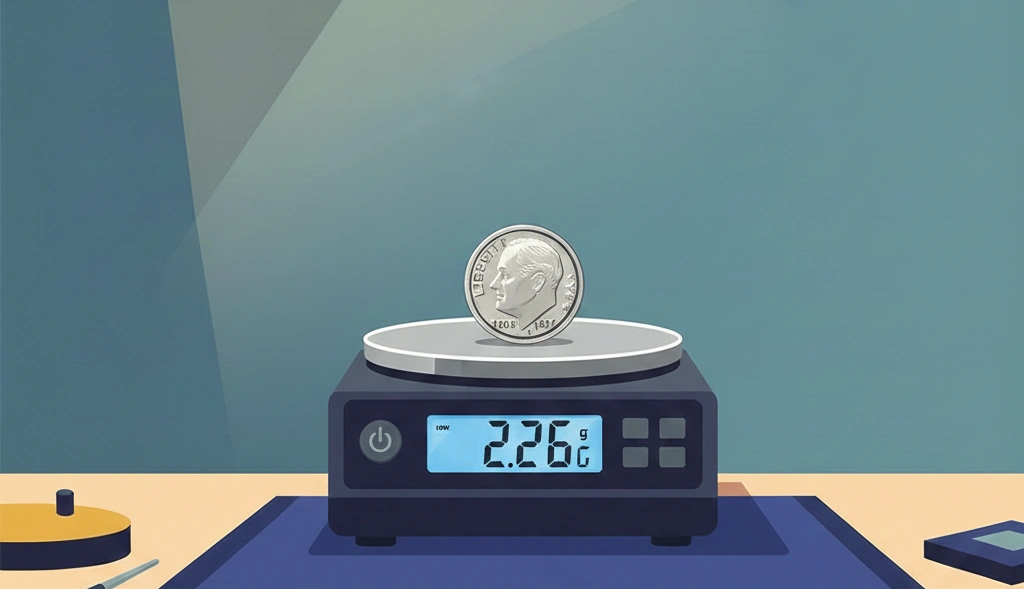
Weight | 2.27 grams |
Diameter | 17.91 mm |
Thickness | 1.30 mm |
Edge | Reeded (118 reeds) |
A weight deviation exceeding 0.11 grams downward indicates significant wear or chemical impact on the surface.
The Phenomenon of the Missing Mint Mark
The period from 1965 to 1967 remains the only time in modern U.S. history when determining a coin's origin visually is impossible.
The absence of "D" or "S" marks on the reverse does not make the coin rare, being a standard characteristic of the entire mintage.
According to official reports, the production distribution appeared as follows.
Philadelphia: Approximately 439 million pieces released.
Denver: Roughly 1.7 billion specimens produced.
San Francisco: A limited mintage including coins for circulation and SMS sets.
This fact eliminates the possibility of forming a premium value based on the minting location, shifting the focus to physical preservation and strike detailing.
Value Assessment of Special Mint Sets (SMS)
In 1967, the Mint did not release traditional Proof sets, having replaced them with Special Mint Sets (SMS).
SMS coins are characterized by a sharper strike and mirror-like luster, differing from regular circulating coins.
The mintage of 1967 SMS sets totaled 1,863,344 units.
SMS Grade | Average Market Price (USD) |
SP65 | $5 |
SP67 | $15 |
SP68 | $35 |
SP69 | $120 |
Coins featuring CAM (Cameo) or DCAM (Deep Cameo) designations within SMS sets are valued significantly higher.
An auction record for a 1967 dime in SP68 Cameo condition was recorded at the 600–800 USD level.
Full Bands (FB) Condition Analysis on the Reverse
A key factor determining the Roosevelt dime's value is the presence of "Full Bands" on the torch.
Horizontal lines on the torch, separated by a clear gap and having no breaks, confirm exceptional minting quality.
Specimens possessing the FB designation occur extremely rarely for the 1967 mass issues.
MS66 FB: The price varies from 250 to 400 USD.
MS67 FB: The value reaches 1,200–1,500 USD.
The presence of the FB marking increases the coin's value by an average of 800% compared to a regular MS67 state.
Auction Record Statistics and Price Limits
Maximum payments for the 1967 dime are linked to achieving the highest scores on the Sheldon scale.
Data are based on PCGS and Heritage Auctions trading results.
Record for Regular Strike (MS): In 2016, a 1967 specimen in MS68 grade was realized for 3,290 USD.
This coin possessed a flawless field and bright mint luster, having no contact marks.Record for Special Mint Set (SP): In 2014, a coin in SP68 DCAM (Deep Cameo) condition was sold for 1,175 USD.
A coin appraisal app statistics show that coins in MS66 grade and lower possess almost no investment potential, being sold at prices close to face value.
Value Dynamics and Market Trends
Analyzing market cycles allows for identifying percentage price changes over a ten-year period.
MS60–MS64 Grades: Price growth totals less than 0.5% per year, remaining within the 10–25 cent range.
MS67 Grade: A steady value increase of 3.5% annually is observed resulting from the gradual reduction in the supply of certified coins.
MS68 Grade: Characterized by high volatility depending on the supply volume at top auctions (fluctuations up to 20%).
In percentage terms, a coin's transition from MS65 to MS67 increases its value 40 times.
Minting Errors and Technical Defects
Production errors of 1967 are confirmed facts influencing the final lot evaluation.
The value of defective specimens is calculated independently of standard tables.
Doubled Die Reverse (DDR): Doubling of the reverse inscription letters.
Detecting clear doubling raises the price to 50–100 USD depending on condition.Off-Center Strike: Striking with an offset.
An image displacement of 10–20% is valued at 40–80 USD.Struck on Wrong Planchet: Striking on a blank intended for another denomination (e.g., a cent).
Such errors are extremely rare, potentially costing from 500 to 1,500 USD.
Identifying such samples requires using accurate scales and calibration equipment.
PCGS and NGC Population Reports
The number of certified coins in the highest grades determines the asset's scarcity.
Grade | Number Registered (PCGS) | Market Availability |
MS67 | 1,452 | Moderate |
MS67+ | 84 | Low |
MS68 | 12 | Exceptional |
The existence of only 12 specimens in MS68 grade worldwide explains the high auction price.
In comparison, the number of coins in MS65 grade exceeds 150,000 pieces, making their purchase for investment purposes impractical.
Valuable Specimen Identification Guide
Determining the 1967 dime's potential requires performing a sequential coin value app inspection.
The first stage involves checking for luster, the preservation of which indicates a lack of circulation.
The second stage consists of studying the torch lines on the reverse under 10x magnification.
Discovering full band detailing (Full Bands) serves as a signal for submitting the coin for professional grading.
The third stage involves weighing the coin to exclude variants struck on non-standard planchets.
Any cleaning traces, including microscopic scratches from cloth, reduce the value to face value.
Demand Forecast for 2026–2030
Current economic data suggest the continuation of interest in transitional period coins from 1965–1967.
The expected reduction in the supply of SMS SP68 coins by 2% annually will lead to a gradual increase in their value.
Mass-produced coins from circulation possess no growth prospects, remaining in the category of common monetary units.
The investment value of the 1967 dime is concentrated exclusively in the segment of high-quality, certified specimens with confirmed Full Bands characteristics.
Conclusion
The 1967 dime without a mint mark represents value only upon reaching the MS67 grade and higher.
The absence of a mark is a technical mintage norm not increasing the specimen's rarity.
Record sales in the thousands of dollars confirm the existence of a narrow market for perfect specimens.
Making a decision regarding selling or keeping should be based on an accurate determination of the grade and surface color characteristics.
Using objective population statistics excludes the overvaluation of common coins, ensuring numismatic market transparency.